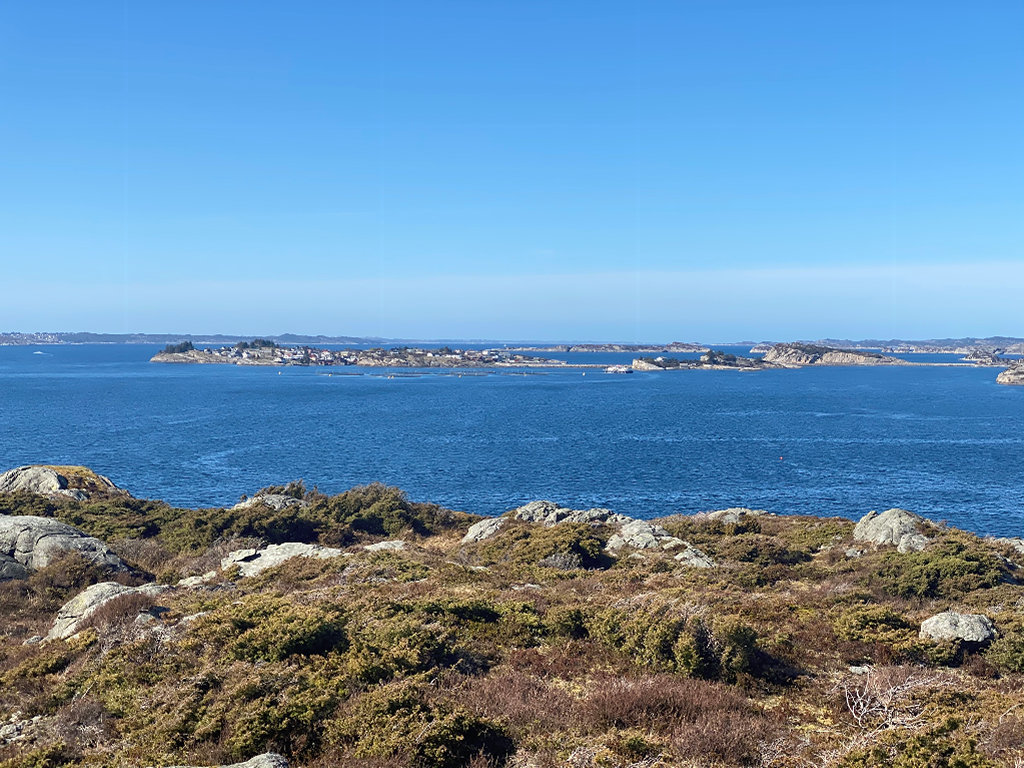
Yesterday we had a nice trip to Midtre Rotøyna, which is located west of Askøy right below Hanøy. My parents-in-law told us they were going to go there with their boat Maja and see if it is a viable place to collect cockles, and we decided to tag along in our own boat.
The trip up there was uneventful and I could test our new Axiom Pro 9 RVX, which I installed just the day prior. It turned out to be readable in direct sunlight from the steering stand, and performed well all around. Unfortunately the wind was shifting often and varied between 5kts and 19kts. Since the distance was rather short, I decided to save the sails for another day and we just motored up there.
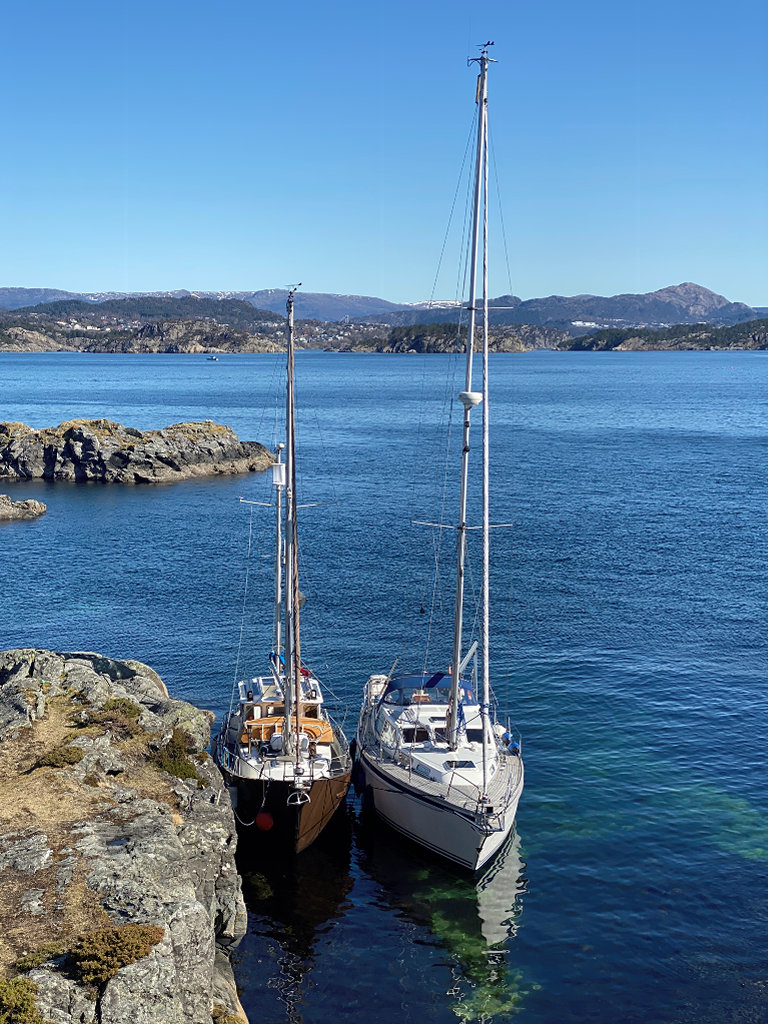
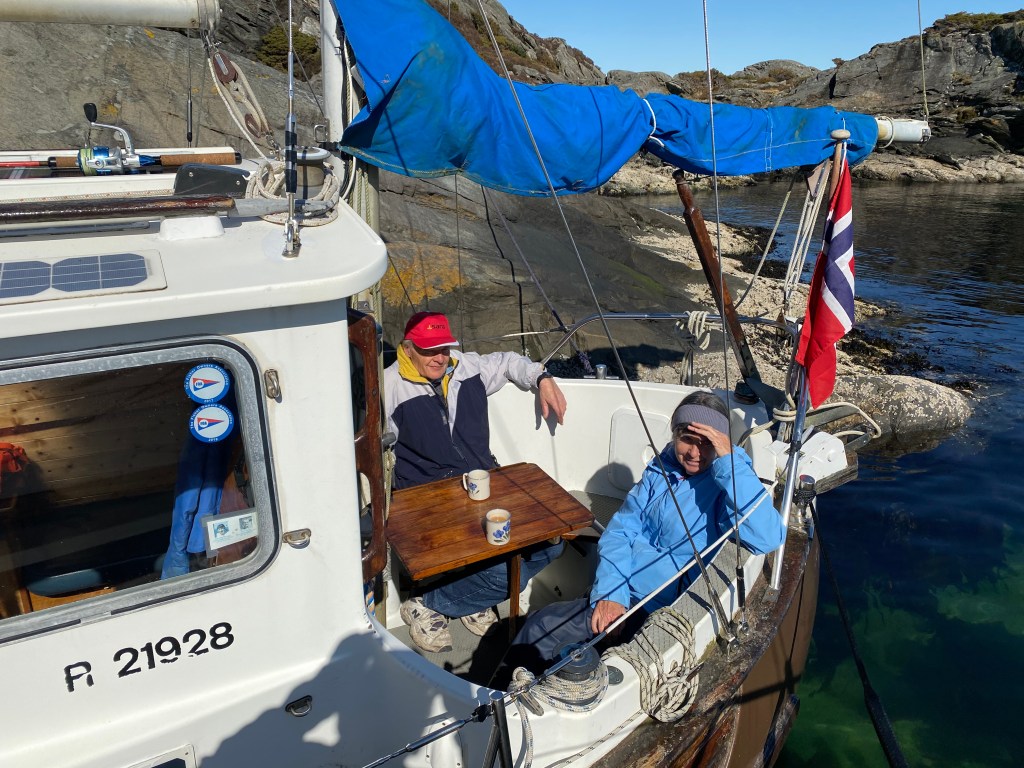
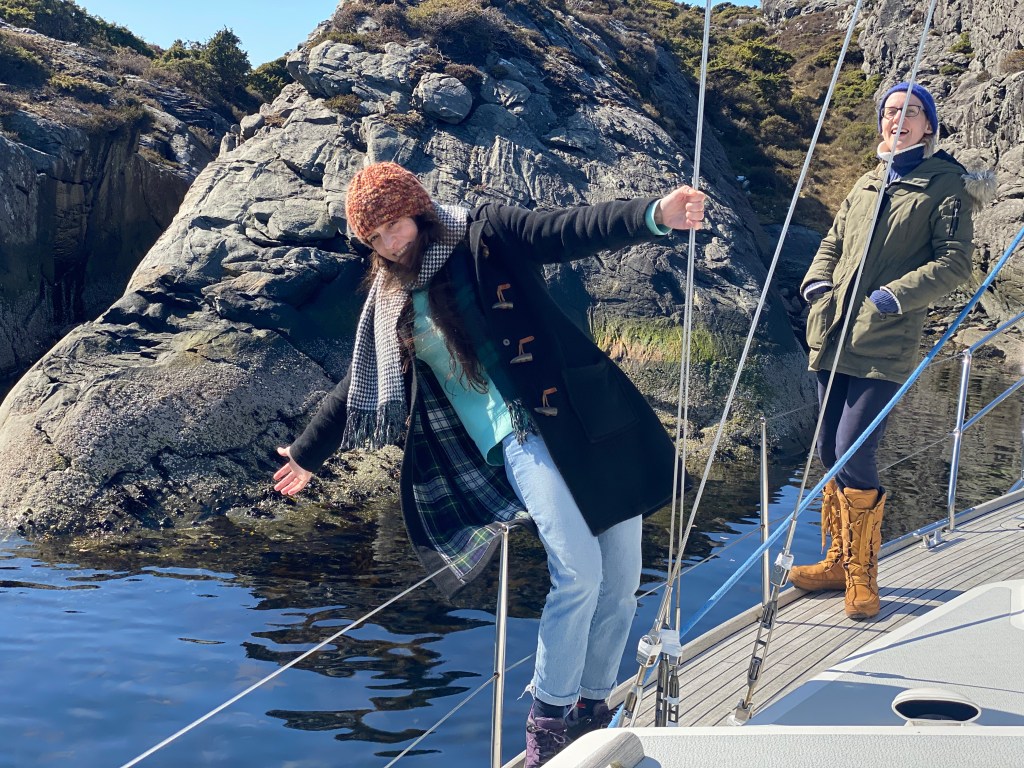
We arrived at Midtre Rotøyna at lunch time and could see Maja from a distance. It was low tide and it is rather hard to see the water depth from the steering wheel. Laila went in front, threw a line to Jeannette on Maja, and we fastened along side the ship which in turn was fastened to the rocks with two lines and nails prepared by Jens. There were not any waves except for the occasional passing fast boat, so mooring this way seemed to work out pretty nicely.
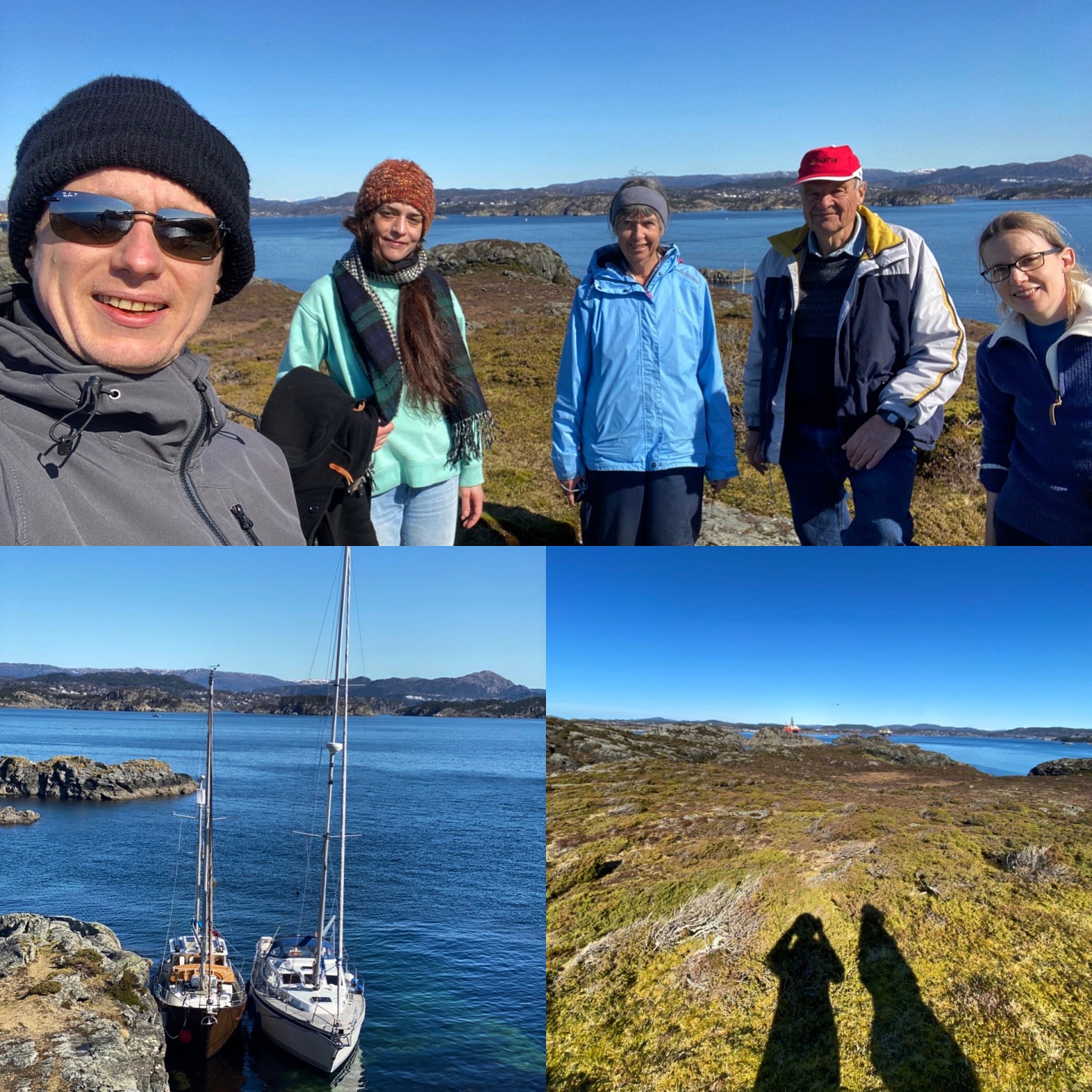
Social distancing is still recommended, so we decided that to have lunch and coffee each on our own boat. After coffee we took a trip to the beach. We found cockles, but decided to leave them behind since there is some algae blooming right now and consumption is not recommended. After exploring the island for a while and taking some pictures we decided to pack up.
Again, the return hime did not reveal any surprises except the unusually high traffic of pleasure boats in the fjord. All around a pretty successful day trip and we now know where to collect cockles.
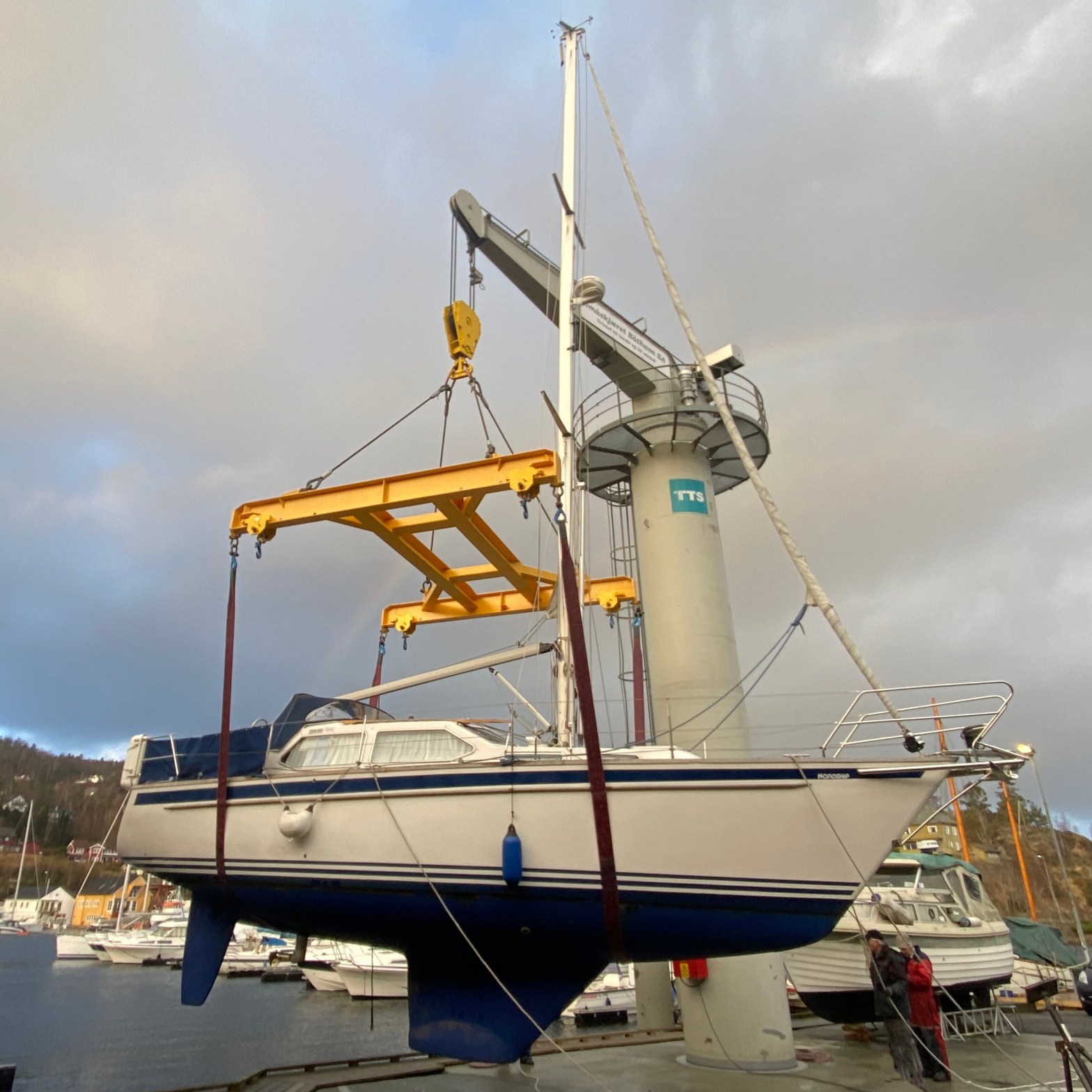
As mentioned in the post before there were some items which I wanted to have fixed right away. It is still winter and not the best weather to get out anyways. But also not too pleasant to work on a boat either.
Space on dry land is quite limited in our harbor, the nice thing is however, since working on boats at that time of the year is not too popular I had as much time as I wanted and did not have to rush things.
Upgrade to Composite Seacocks
While we inspected the seacocks on our visit I got an idea that they were not in the best condition. Boats here are in the water year round. If the seacocks get used rarely or are from the wrong material they can seize up, or worse, fail and for example shear of at the through hull. The latter would have catastrophic consequences.
Waste Outlet
Head sink
Galley
Handle Galley
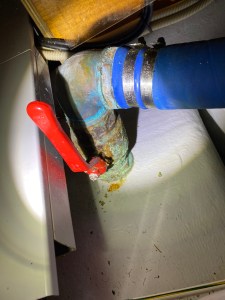
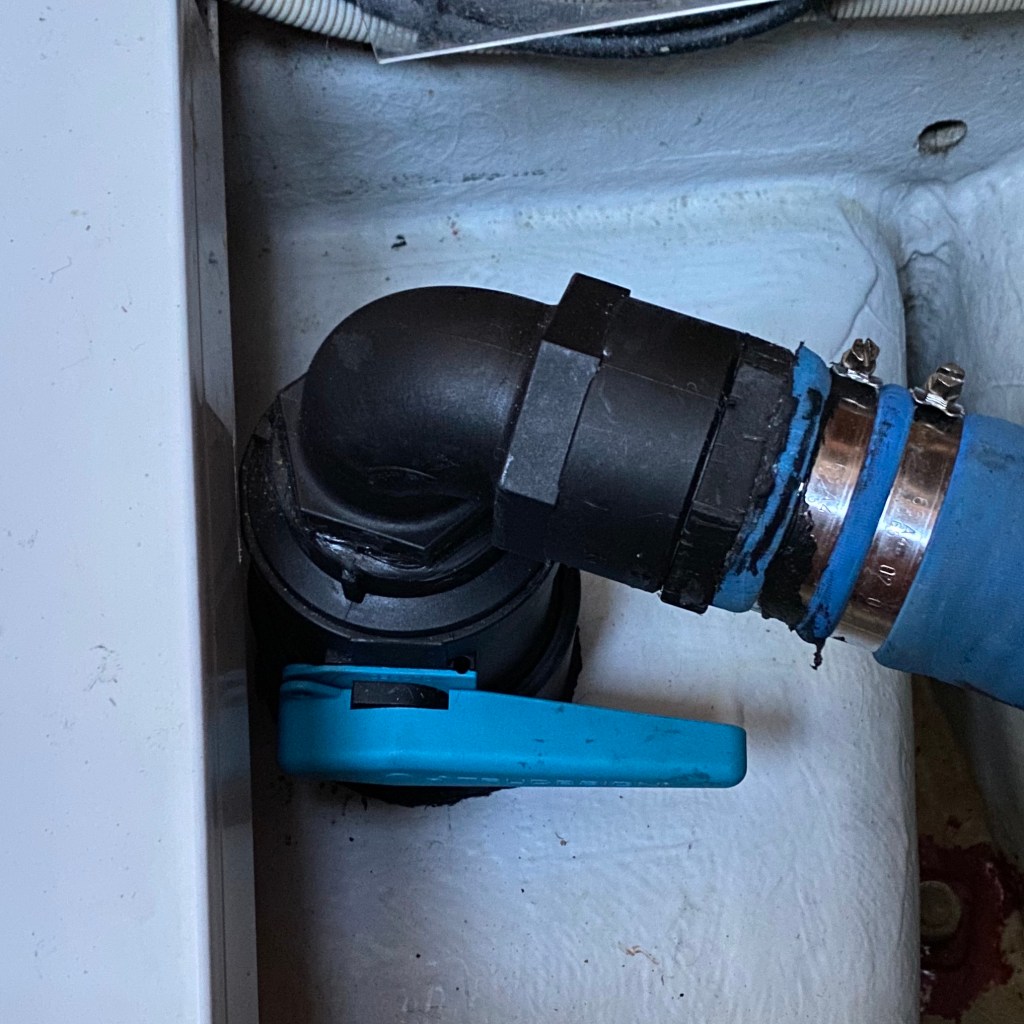
Above you can see some of the seacocks before replacement. Especially the valve in the galley (last two pictures above) I was most worried most about. It did not look too bad on first sight from the front. But while trying to close it I suddenly held the handle in my hand. I took a picture of it from behind and it became immediately clear to me that there was a case of dezincification which is indicated by the purple discoloration.
What happens is that the zinc in the brass (a zinc/copper alloy), is lost from the material by corrosion. This happens either by galvanic corrosion as a result of the connection of two dissimilar metals and/or electrolytic corrosion the result of incorrect bonding. The end-result is that the most of the material remaining is only copper, which gives you a rather porous structure with little mechanical strength. That turn can lead to total failure of the valve/through hull.
Searching the web for the markings on the seacock, CW617N, yielded that this alloy is not corrosion resistant in saltwater. The reason, why they use these parts is price pressure. Some googling told me that a lot of boat manufacturers (even so called “quality”-manufacturers) use the same inferior materials. Here is a great article (pdf) about this issue, seacock alloys, and what materials to use.
I assumed that the through hulls are also made from the same material, except the one from the galley. The boat has a seawater-cooled fridge made by isotherm, with the cooling circuit routed through a special seacock below the sink. Here the manufacturer supplies detailed information alloy used in the part. You can even fit an own zinc anode for the seacock only (which I did of course).
Long story short: the seacocks and the through hulls had to be replaced so that I could sleep well on the boat. I would have really disliked waking up with water gushing into a sheared-of seacock.
Browsing through the different marine equipment stores here in Norway, both online and offline, revealed that it is impossible to determine which alloy you get when buying a brass seacock here. They simply don’t know or don’t care and just call it brass, the same with through hulls. In the UK and Germany you can buy “DZR”-dezincification resistant parts or you get some information about the alloy specification. Not here though, it is essentially a lottery.
That made the decision easy for me, i.e., I chose TrueDesign composite through hulls and seacocks which were readily available. The only metal through hull left is the corrosion resistant connected to the fridge.
I won’t go through the whole procedure on how to do the removal and installation. There are several excellent videos covering this. Sailing Britaly has very good, and very detailed explanation one on YouTube which can be found here. I employed his way of removing the old parts with the help of an angle grinder from the outside.
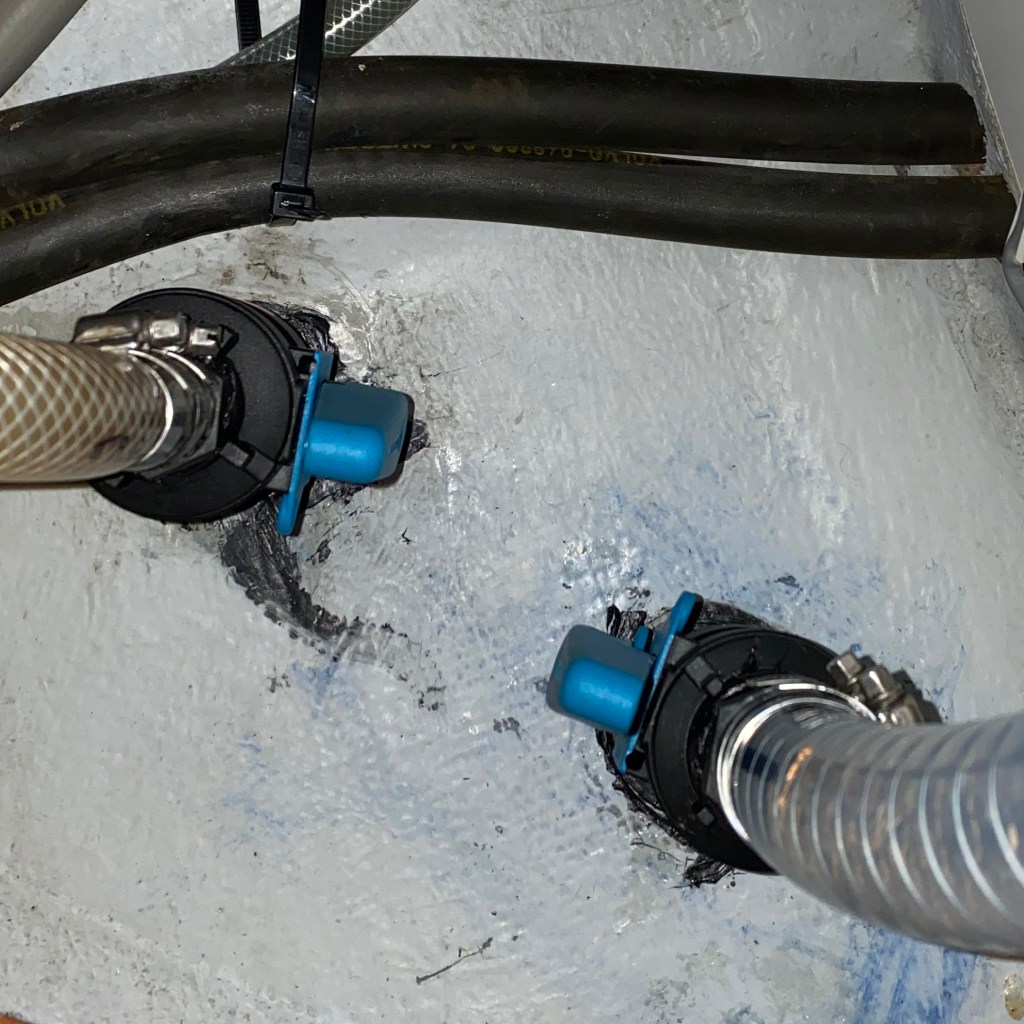
Then the two through hulls in the head (toilet and sink) where installed using TrueDesign’s recommended method of using epoxy. For those two I did not install a load bearing collar since you (or anything heavy) have to fall into a cabinet under the sink to risk mechanical damage to the seacock. A risk that I would call extremely improbable.
All other, more openly installed through hulls/seacocks, were installed using Sika 291i as sealing agent and got a load bearing collar.
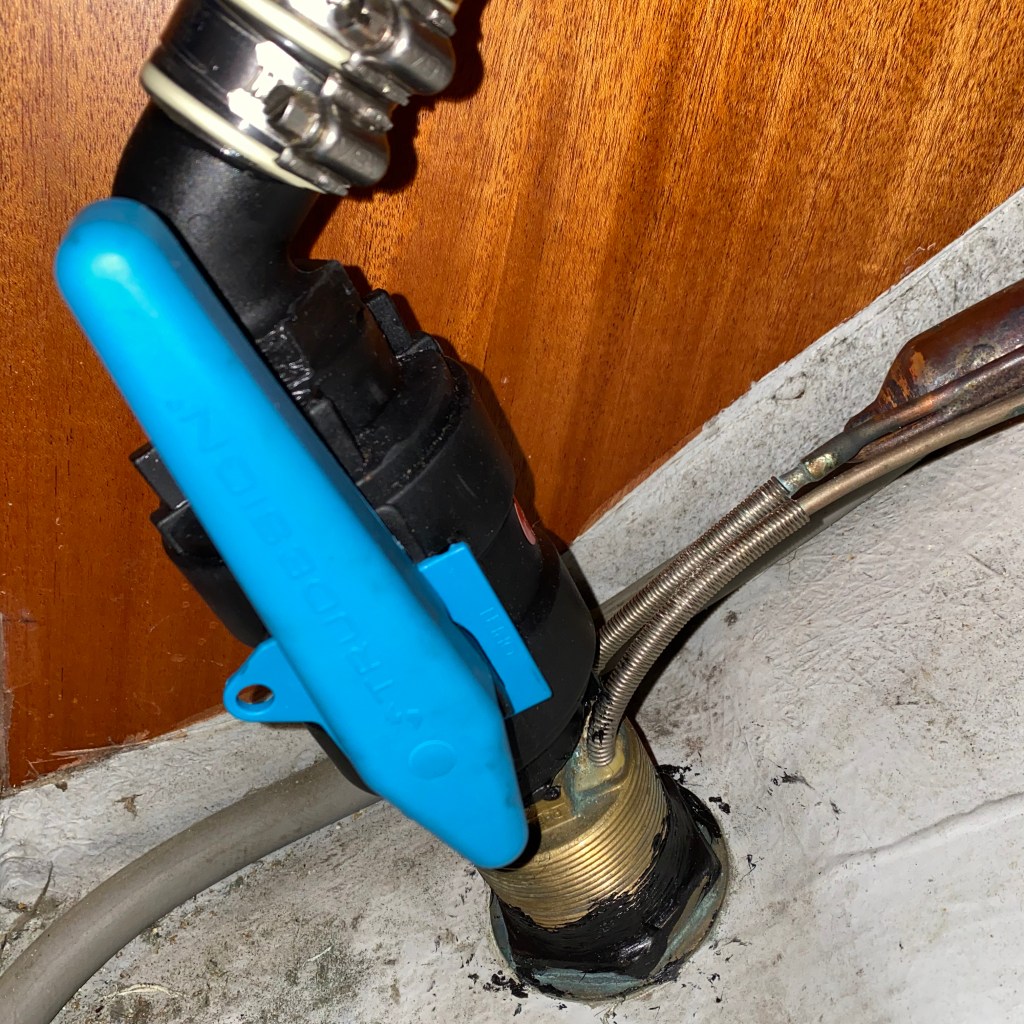
Here the results:
Waste Outlet
Galley
Head
I know I could have done a better job cleaning up …
Volvo Penta Diaphragm Replacement
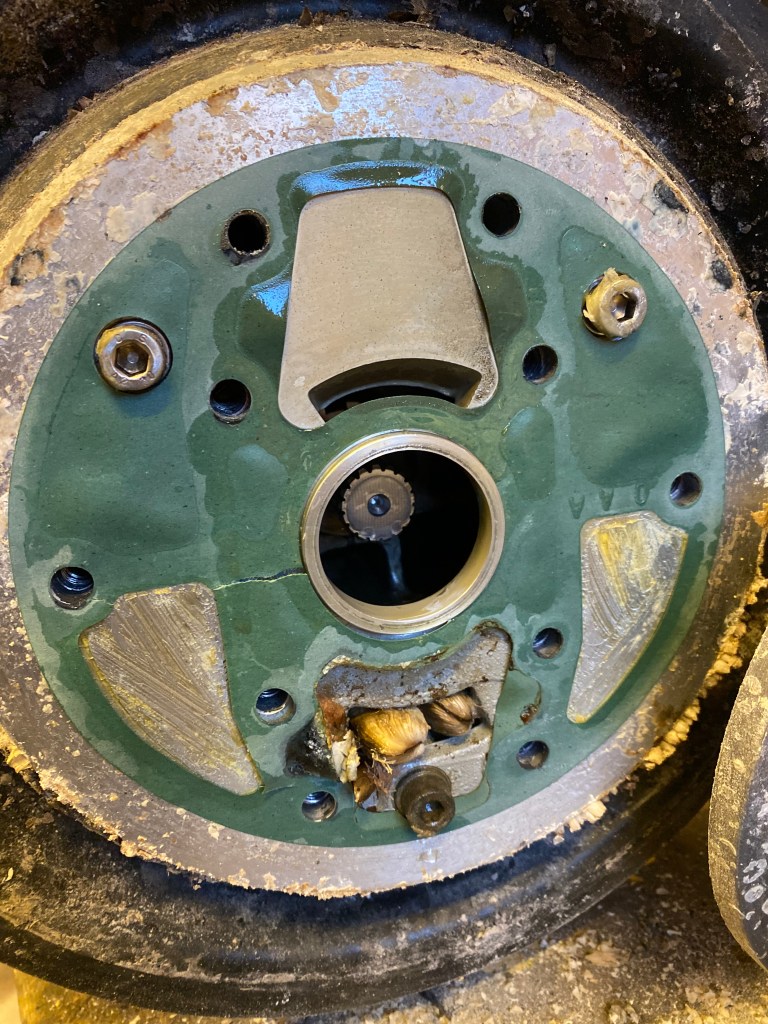
The diaphragm of this boat was not replaced for 18 years. Volvo recommends replacement of this critical part every 7 years. So after its more than 257% service life it was about time to change it. Again, I can only recommend watching Sailing Britaly with a more than 1 hour long video if you want to know how to do it.
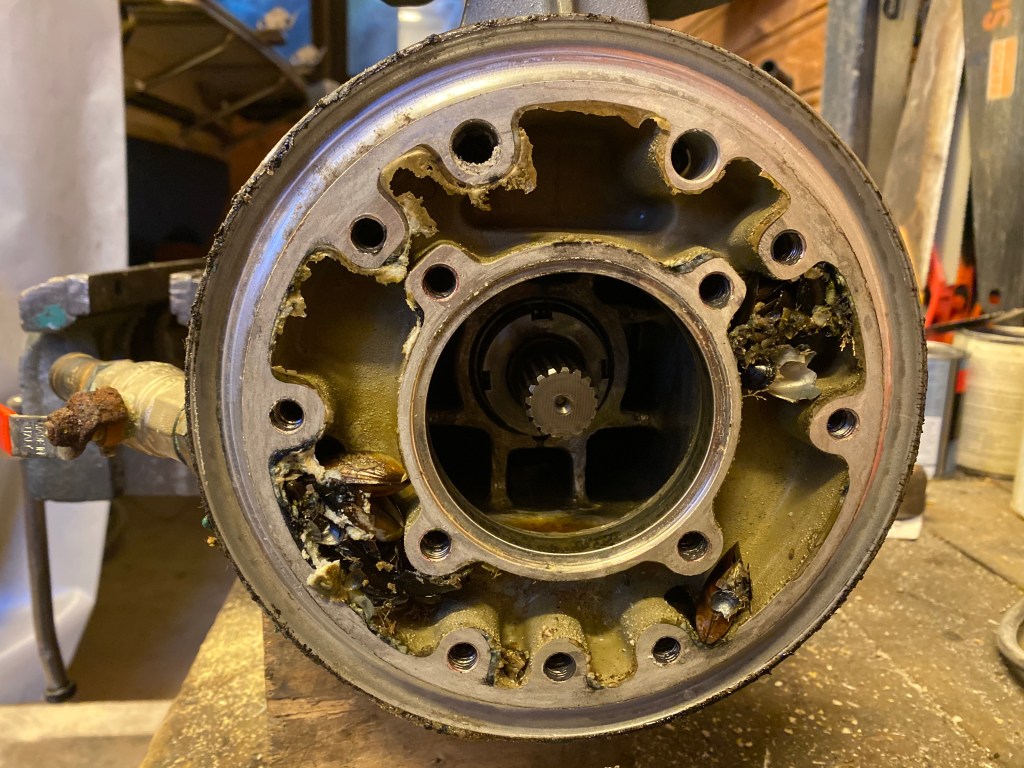
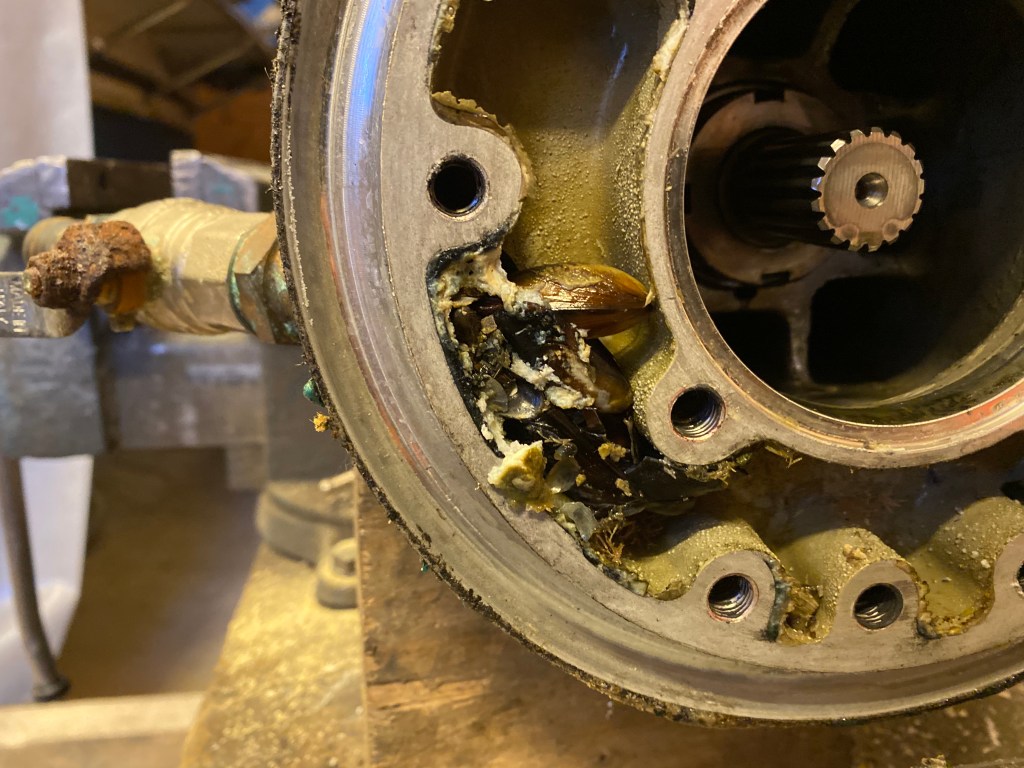
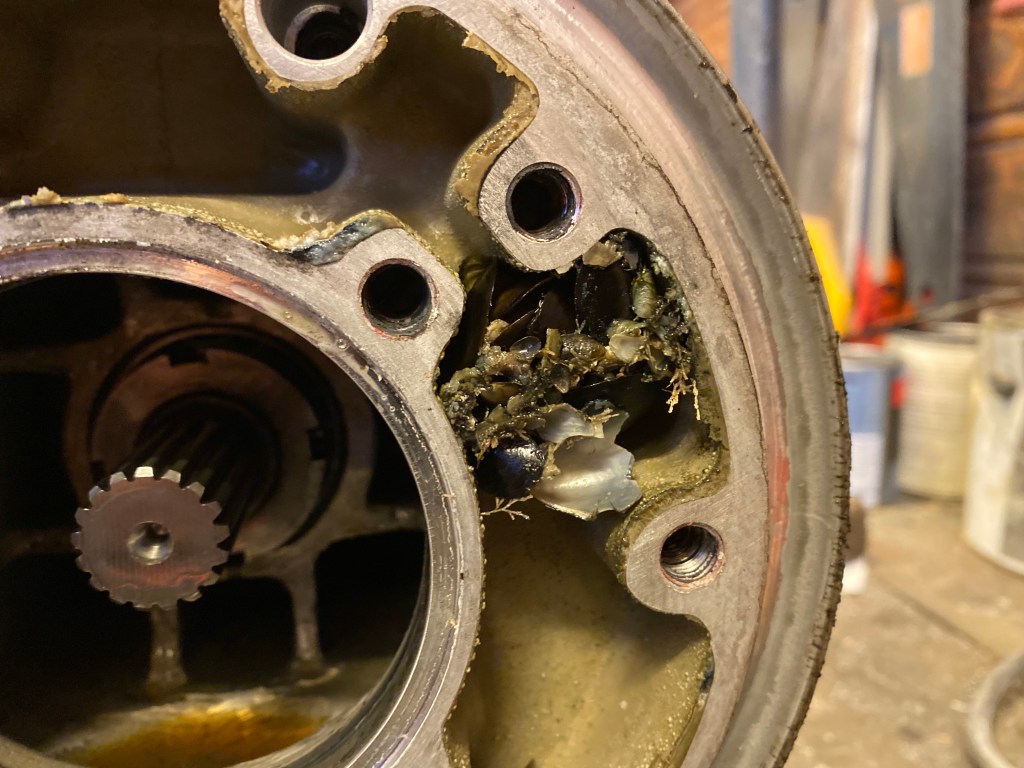
Nevertheless, there are two things which I’d like to add. The first thing is that I was surprised how bad the growth can be inside the saildrive leg if you keep it in the water for 18 years. See for yourself.
I removed probably two handful of these fully grown mussles from the inside of the saildrive. I can only imagine how much they impeded the flow of the cooling water.
The second thing is that reattaching of the saildrive to the motor is a two man job. And even then it was hard. Jens helped me again, but it took us the better part of an evening to get the drive aligned so that we could mate both parts properly without using excessive force. Maybe it will be easier the next time I do it, but that will be earliest in 2027 and for now I am just happy that everything works.
So I bought the boat, now it was time to get it into its home berth. Having so little experience on boats in general, let alone navigating one that I don’t know for the first time on my own was obviously out of the question. In need for somebody experienced, both with navigating the Norwegian weather/fjords and troubleshooting almost everything which could break, my natural choice was again to take my father-in-law, Jens, with me on board.
Since I wanted the boat close by as soon as possible I jumped right into the planning phase. One concern was that in winter time the weather in western Norway can be quite bad at weeks on end. That combined with the possibly unruly sea state and the unfamiliarity with the boat could lead to a rather unpleasant trip.
The Plan
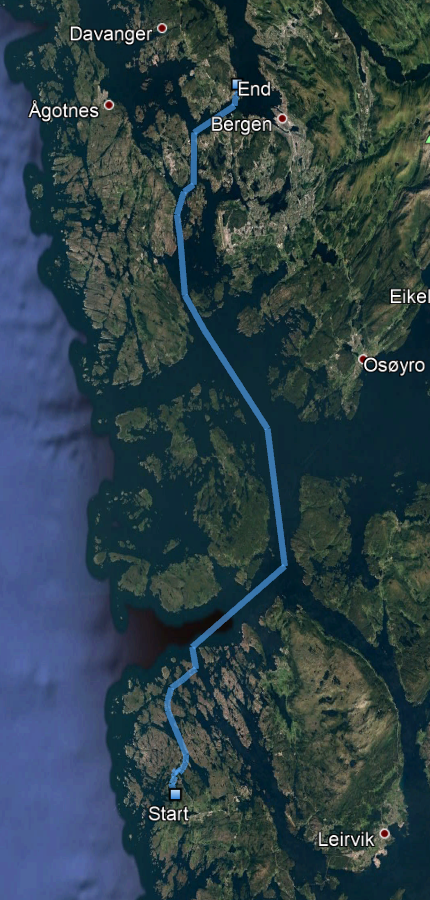
Planned route
With the weather in mind we hoped to find a route that avoids open ocean. If the weather was going to to turn foul we wanted to be able to be sheltered fast. Luckily I found a route without exposure to the north sea, and the only stretch which could have had some swells in it was a 10nm north-east segment over Selbjørnsfjorden.
The route details:
Start: Urangsvåg (59°48’48” N 5°08’49” E)
End: Florvåg (60°25’17” N 5°14’36” E)
Distance: 43nm
Estimated time: 8h 30min / 5kts average
The next challenge was daylight. The date we planned for this journey was the 18th December and sunset that day started 15:30 local time. So we needed to get to Selbjørnsfjorden before that time since the first part requires navigation by sight in the narrow natural canals of Bømlo. From there on we could navigate by light sectors of navigation marks.
The Execution
The days leading up to the 18.12.19 the weather forecast was promising. So we departed early from Askøy to Bergen and took express ferry from there to Rubbestadneset.
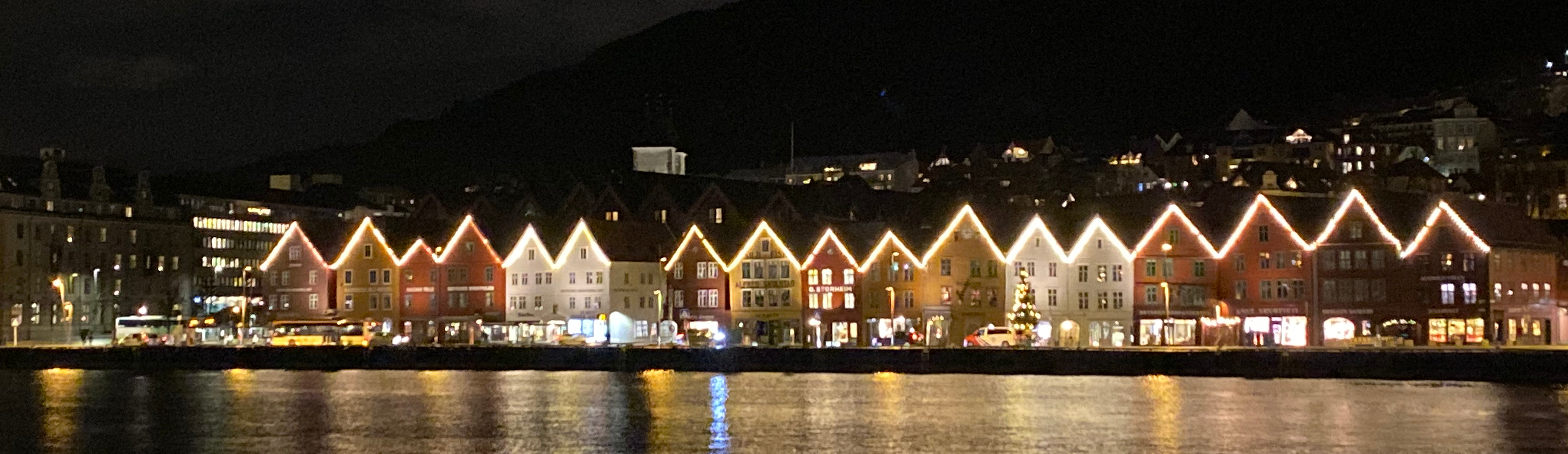
Bryggen early in the morning seen from the ferry
One and a half hour later, approximately 09:45, we arrived in Bømlo where we were picked up by the former owner. After some time of going through papers, checking equipment (especially the lights) we were on our way by 11 o’clock. By then the sun had come up, there was no cloud in sight and winds were calm.
Motoring
Traffic 9 o’clock
The first part of the route was calm and we were mostly concentrated on navigating through the maze of waterways. The autopilot did its work keeping us on a steady heading and everything was working better than expected. No technical hick-ups at all.
We made good progress and only 1:30h later we reached Selbjørnsfjorden. The wind freshend up slightly from south east, just to about 8-10kts. I was eager to try to sail and we set unfurled the genoa and motor-sailed a short while. Since the wind was steady, there were almost no waves and everything worked better than expected for a virgin journey we set out to deploy the mainsail, too. We did in the end, but the whole ordeal would probably have been easier if we had furled the genoa first. Our approach led to some interesting maneuvering into the wind with the motor running, all while the genoa was flapping about. In the end we were successful and with all sails deployed we were doing a steady 6,5kts on a broad reach in the light breeze.
Sailing for the first time
So we continue on, tried all kinds of switches, levers and valves, browsed through the huge folder of documentation which came with the boat and made further progress towards our destination.
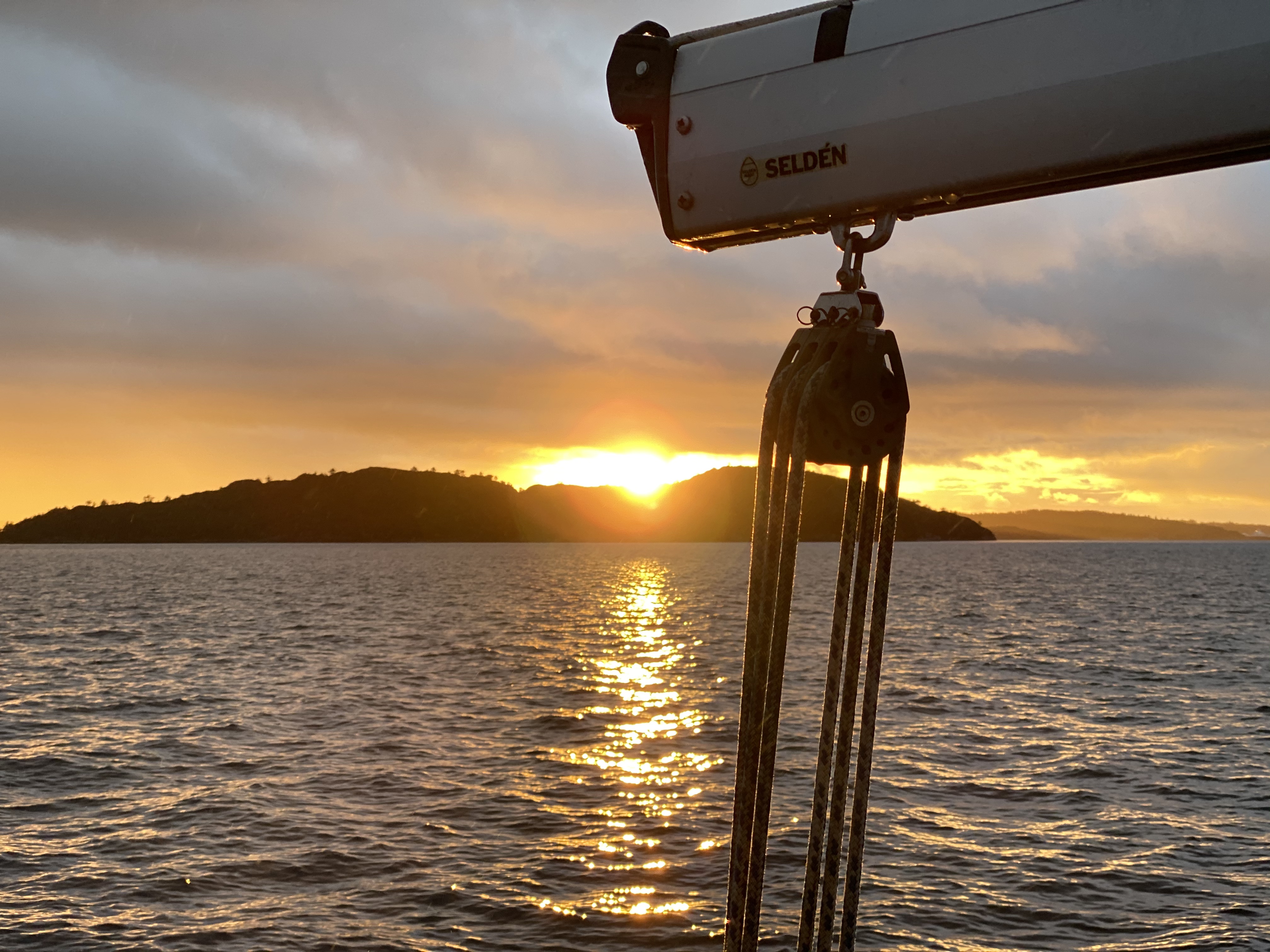
Sunset
Soon the sun set, we took in the sails, and now it was essentially navigating by GPS position on the iPad map, lights along the coastline and various illuminated shallows. From time to time larger vessels were heading toward us and without any AIS it was at least once rather interesting to figure out their distance and course in relation to us.
After six and a half hours we passed the bridge to Sotra and entered even for me familiar waters (I did some kayaking in the area before). Around here I felt that it had a long day.
One of the last pictures I took was us passing the bridge over to Askøy, which removed the last doubt, that we made the trip without any incidence.
Askøy bridge
We arrived at our destination at 18:30, tired and somewhat cold. The last maneuver was to get the boat into its berth which turned out harder that it expected. We, or rather Jens, managed it in the end. Nevertheless, I will have to find a new spot in the marina if I want to get in and out of there without any near miss into another boat. Without bow thruster the inner berthing is just too tight for a 35ft boat.
All in all a successful maiden voyage. No technical incidences, the boat performed as expected and the weather was actually so good that I managed to become slightly sunburned in my face … in Norway in December that is …
Or better yet, I bought one. But lets start from the beginning.
For some time now I own a berth in a nearby marina. They are hard to come by, especially if you want them at a reasonable price and close to where you live. So when the opportunity arose I took a leap of faith and bought it. That was almost two years ago and I told myself that I will buy a boat when the time is right. Until now I let other people park their boats there, otherwise it was just two empty mooring fingers with water in between.
This autumn, while on vacation in Greece I saw quite a lot sailboats anchoring in the bay from our hotel room and thought “the right moment may be never, so why not buy a boat now?”.
Primary objective for the boat is cruising on extended trips around the Norwegian coast to begin with. Maybe crossing over to Denmark/Shetland when I get the hang of it. I only sailed once or twice with my father-in-law on his Fisher 30 motorsailer but I enjoyed it immensely when the engine was of and we were going only by the power of the wind, so I knew that it should able to sail. From my impression of the size of the Fisher 30 I derived a target size of between 32ft and 38ft (it has to fit into the berth). A bit bigger than the Fisher and roomy enough to accommodate another couple for some extended trips. The weather in Norway and especially around Bergen can be quite nasty for weeks on end and a steering place with a roof above your head is appealing. Of course the boat has to be the right price, i.e., inside my budgetary constraints, and not a complete renovation project. I want to use it from when I get it and not spend a year on renovation.
What I was looking for
Sailboat or motorsailer
32ft – 38ft in length
Two cabins
Pilothouse or good lookout from the inside
In usable condition / seaworthy from when I buy it
Inside my budget
From looking through our marina i found Nauticats or Nauticat-like designs always very interesting. I even found a Nauticat 38 in my price range in Germany which I inspected with my brother and a surveyor. The latter saved me from a very costly and probably time consuming adventure with this Nauticat so I kept looking.
Some days ago my father-in-law got a targeted ad while changing his online-newspaper account password. (There might be a chance that I accidentally used his password to skip a paywall, forgot to log out, and the system made a profile from all my searches for Nauticats and other pilot-house sailboats. That in turn gave him then the targeted ad of the boat.) He called me, forwarded the listing and we made plans to check out the boat which is located conveniently just two hours by car from Askøy.
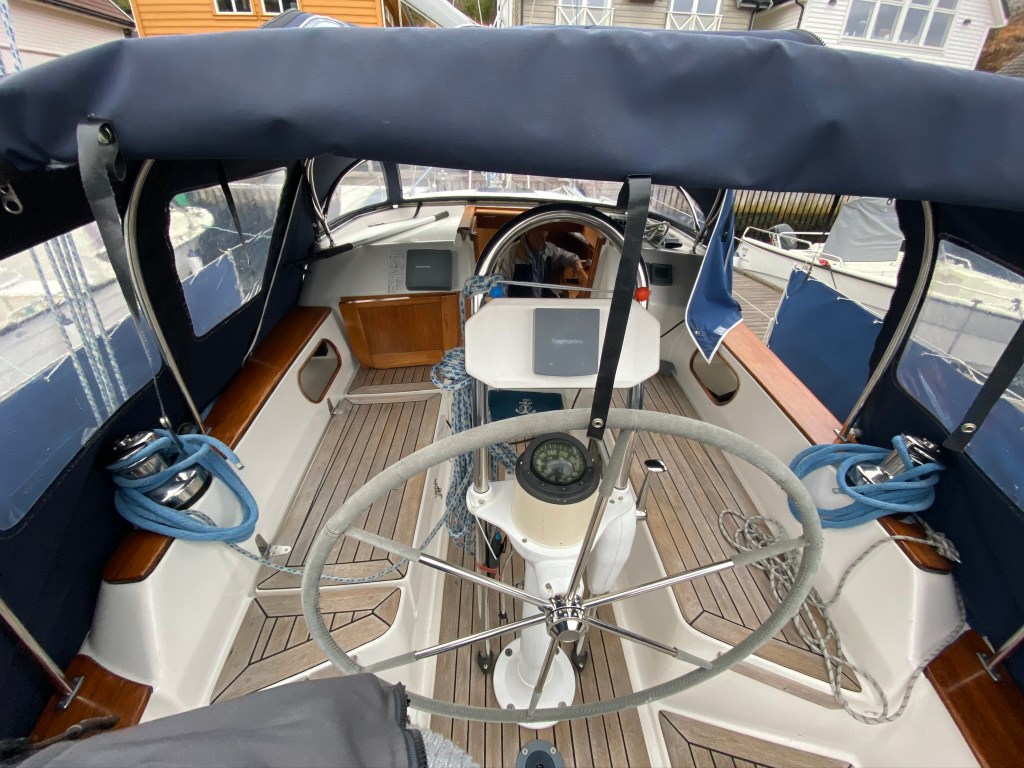
While waiting for the day set out to survey the boat with my father-in-law I was obsessing over the online ad. A 2002 Nordship 35 DS, i.e., type deck-saloon sailer and according to the ad in immaculate condition. Especially the last part made me somewhat skeptical but also antsy to finally have a look for myself. Nevertheless, the boat ticked all the boxes of my list of what I was looking for. Granted, there is no inside steering position per se, more of a lookout, with good forward visibility and control of the autopilot.
So the day arrived, we set out by car and arrived in Bømlo, where the boat had its home so far. We were greeted by the owner directly. That alone put my mind a bit at ease, since in my previous experience with the trashy Nauticat in Germany I had only contact with a salesperson.
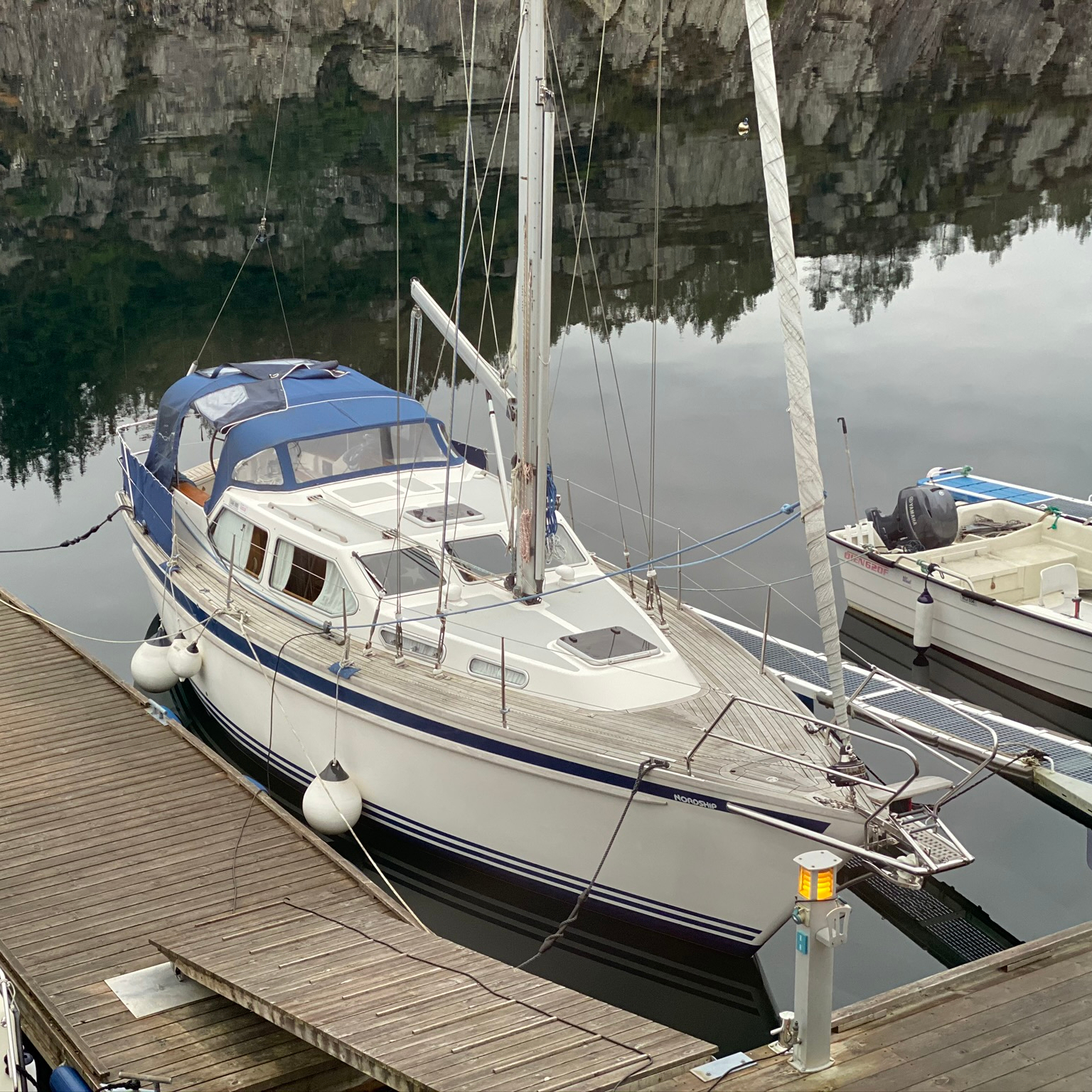
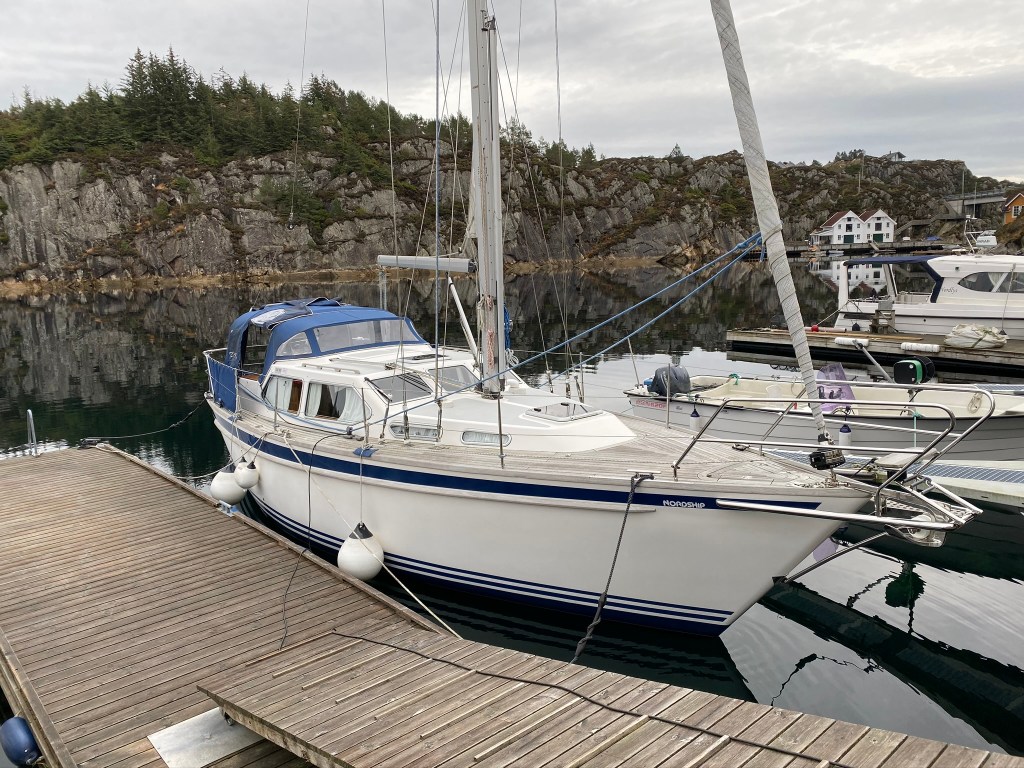
First impressions of the Nordship 35 DS
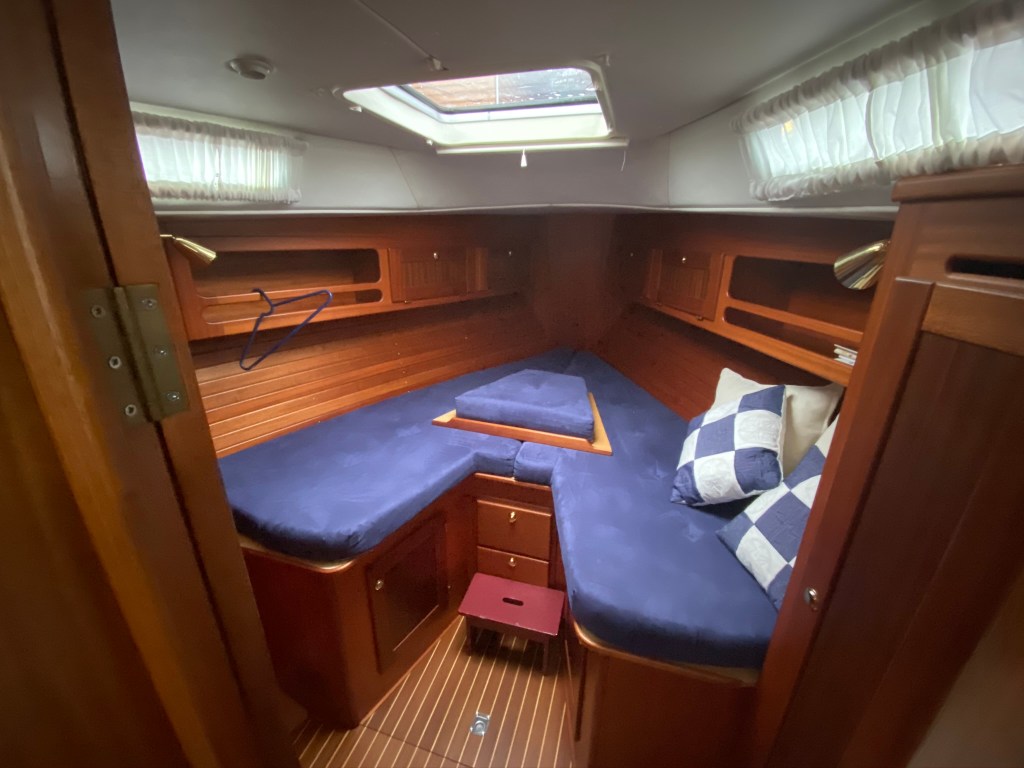
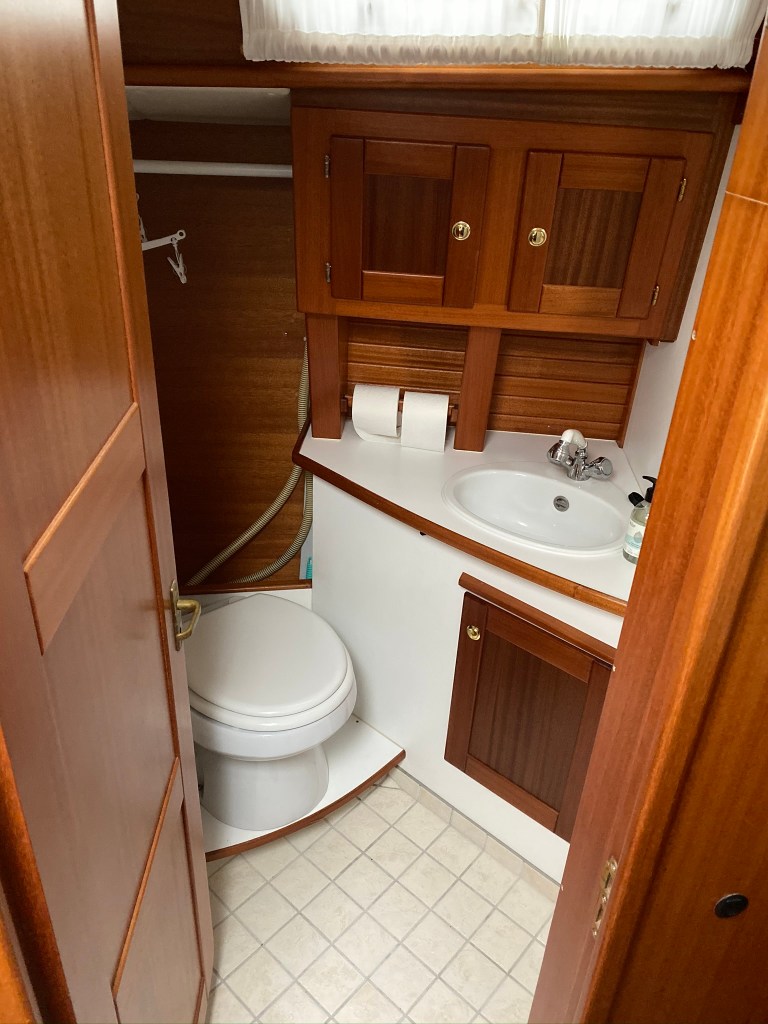
The pictures give only a small impression of it, but what was really interesting was the condition of this now roughly 20 year old boat. Its interior really was in immaculate condition and it seemed to have been only lightly sailed. The teak was well aged and I could not locate any obvious flaw. The owner volunteered all information he had or he was aware of. He even pointed out minor flaws which we had not found by ourselves (like a minuscule leak in the forward cabin which only happens rarely, so he could not locate the source of it, more of that in another post).
So after inspecting the boat for nearly two hours, opening every hatch and crawling into every space to look for flaws which could potentially be a turn-of we came to our conclusion. My father-in-law is an outspoken man with many years of experiences with boats and building on and around boats, and he told me his verdict while the owner was on the phone with another potential buyer: “it does not get better than that”.
After some chat in the boat on why he wanted to sell (mostly because of age and difficulty in handling a sailboat due to a medical condition) I made the decision on the spot and we sealed the deal. The decision was also made easy because the owner seemed to be honest about the condition and did not try to hide anything. Even after we agreed on a deal he asked if I’d like to have the dinghy he used with the boat and the dehumidifier at no price. I graciously accepted.
So, now I am the owner of 35ft sailboat. I could not be happier, but there is of course a list with some things which need fixing.
Things that need some attention
Find and fix the unidentified leak (probably some through hull fixture)
The genoa, some blocks and sheets are usable but quite worn
The seacocks and associated through hulls look worn and might need replacement
The saildrive membrane is still original and has to be replaced
The chartplotter is outdated
It is a used boat, therefore some work is expected. Nevertheless, judging by age and condition it is a good deal and I cannot wait for the day we can sail it home.







 Syvsover